- Stage of development
-
Advanced preclinical development: in vitro and in vivo efficacy and acute toxicity completed in murine models.
- Intellectual property
-
Priority patent application filed
- Intended collaboration
-
Licensing and/or co-development
- Contact
-
Dania TodorovaVice-presidency for Innovation and Transferdania@unizar.escomercializacion@csic.es
- Reference
-
CSIC/DT/019
Additional information
#Health
#Therapy
#Cell Therapy
#Oncology
Copper–Thiourea Anticancer Complexes with Enhanced Potency and Reduced Toxicity
Copper complexes with thiourea ligands have demonstrated high cytotoxic activity against tumor cells, along with low toxicity in murine models. Furthermore, these complexes exhibit high stability under physiological conditions.
- Market need
-
Copper complexes with thiourea ligands have demonstrated high cytotoxic activity against tumor cells, along with low toxicity in murine models. Furthermore, these complexes exhibit high stability under physiological conditions.
- Proposed solution
-
Copper is an essential endogenous metal in the human body; it is highly active in various types of cancer and exhibits excellent biocompatibility.
Copper compounds with thiourea ligands have demonstrated superior antitumor activity, both in vitro and in vivo, positioning them as a highly promising alternative to conventional cancer therapies.
This potent cytotoxic activity against tumor cells, coupled with low toxicity in murine models and high stability under physiological conditions, further enhances their therapeutic potential and clinical interest.
- Competitive advantages
-
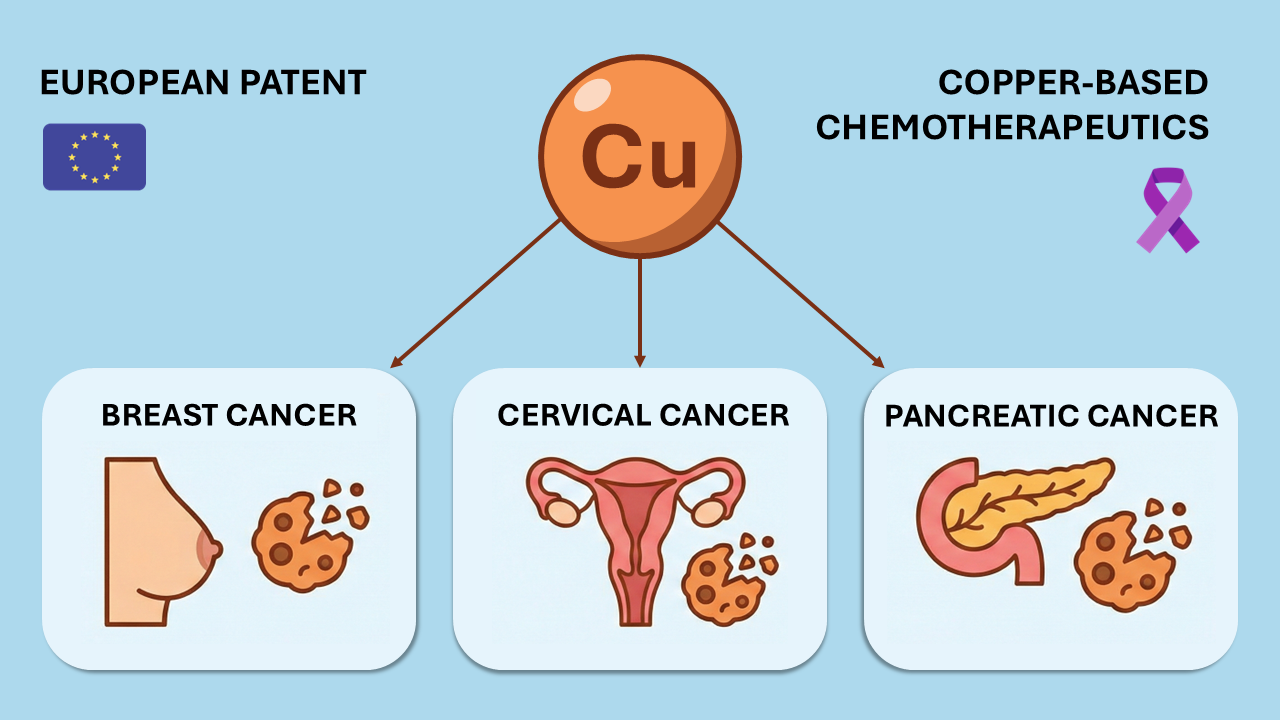
- Copper is particularly biocompatible and it is highly active against several types of cancer (breast, cervical, and pancreatic).
- Copper complexes with thiourea ligands have demonstrated superior antitumor activity, both in vitro and in vivo.
- These compounds exhibit potent cytotoxicity against tumor cells and low toxicity in murine models via both oral and intraperitoneal administration.ostrado baja toxicidad en modelos murinos (oral e intraperitoneal).