
- Stage of development
-
Prototype validated in laboratory
- Intellectual property
-
Priority patent application filed
- Intended collaboration
-
Licensing and/or co-development
- Contact
-
Alfonso del ReyVice-presidency for Innovation and Transferadelrey@icmab.escomercializacion@csic.es
- Reference
-
CSIC/AF/027
Additional information
#Energy
#Energy Storage
#Supercapacitors
Hybrid supercapacitor with high energy density
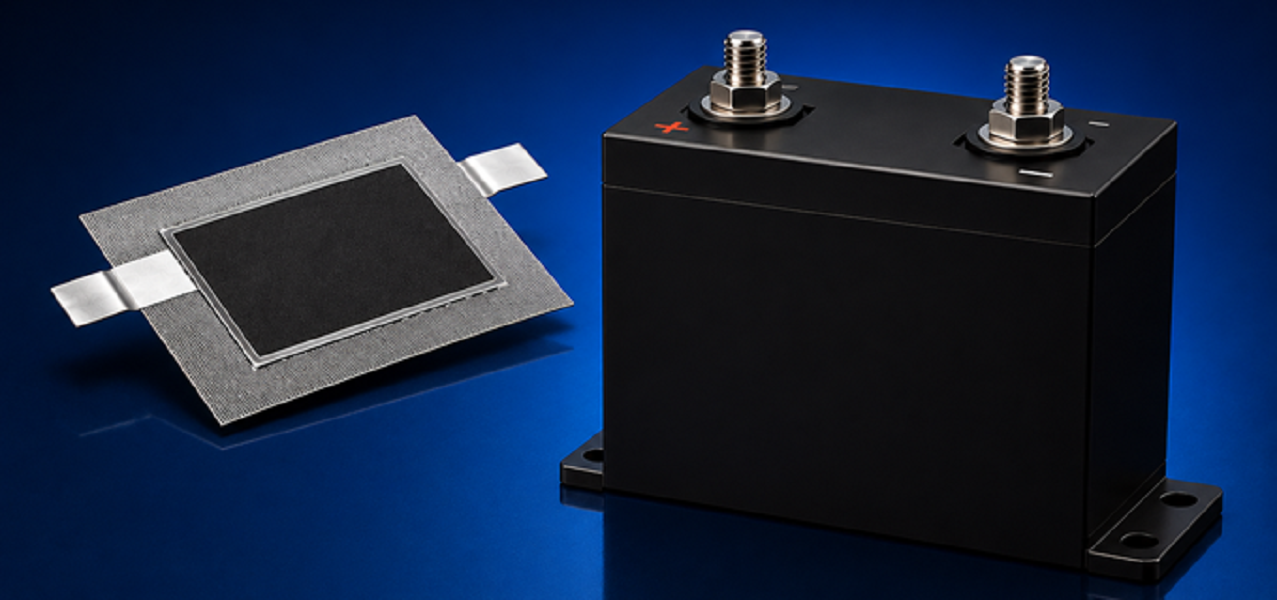
Asymmetric supercapacitor device with high energy density and high power.
- Market need
-
The transition to renewable energy and the electrification is increasing demand for energy storage systems that combine high power with high energy density. Lithium-ion batteries offer high energy density, but charge and discharge slowly and depend on critical raw materials. Conventional supercapacitors charge and discharge rapidly at high power, but their low energy density and high fabrication cost limit their use in energy-intensive applications.
There is a clear market need for a high energy density supercapacitor, based on abundant raw materials, for applications such as grid stabilization, rail transport, EV fast charging, industrial equipment starting and electric aviation.
- Proposed solution
-
A new asymmetric supercapacitor with increased energy density while preserves high power and long cycle life.
The electrodes combine porous carbon matrices with metal oxides, thus having high surface-to-volume ratios and redox reactions (hybrid electrodes). The final step of electrodes fabrication is a pulsed laser processing. Aqueous and organic electrolytes can be used.
- Competitive advantages
-
- Higher energy density than conventional supercapacitors while maintaining high power.
- Fabricated from abundant, non-critical raw materials.
- Up to 50% lower fabrication cost per Wh.
- Up to 50% lower production energy per Wh.
- Compatible with safer aqueous electrolytes.
- Long cycle life validated in laboratory prototypes (>30,000 cycles).