- Stage of development
-
Proof of concept in vitro in rat pancreatic acinar cells
- Intellectual property
-
Priority patent application filed
- Intended collaboration
-
Licensing and/or co-development
- Contact
-
Miquel SuredaVice-presidency for Innovation and Transfericmtransfer@icm.csic.escomercializacion@csic.es
- Reference
-
CSIC/MS/002
Additional information
#Biotechnology
#Molecular and cell biology
#Health
#Therapy
#Drug delivery
#Peptide / Protein
Protein motif capable of directing molecules to the zymogen granules of pancreatic cells
A protein domain has been identified with the ability to direct membrane proteins and polypeptides of interest to the zymogen granules of pancreatic cells.
- Market need
-
Zymogen granules present in pancreatic cells are key structures in pancreatic physiology and are directly involved in serious diseases such as pancreatitis. However, although strategies exist to modulate their activity, they are currently not considered therapeutic targets.
Moreover, there is a challenge in specifically directing therapeutic molecules to defined intracellular compartments, and current solutions such as antibodies are expensive and limited by their size.
Therefore, there is a need to develop tools capable of directing molecules toward key organelles, such as the zymogen granules.
- Proposed solution
-
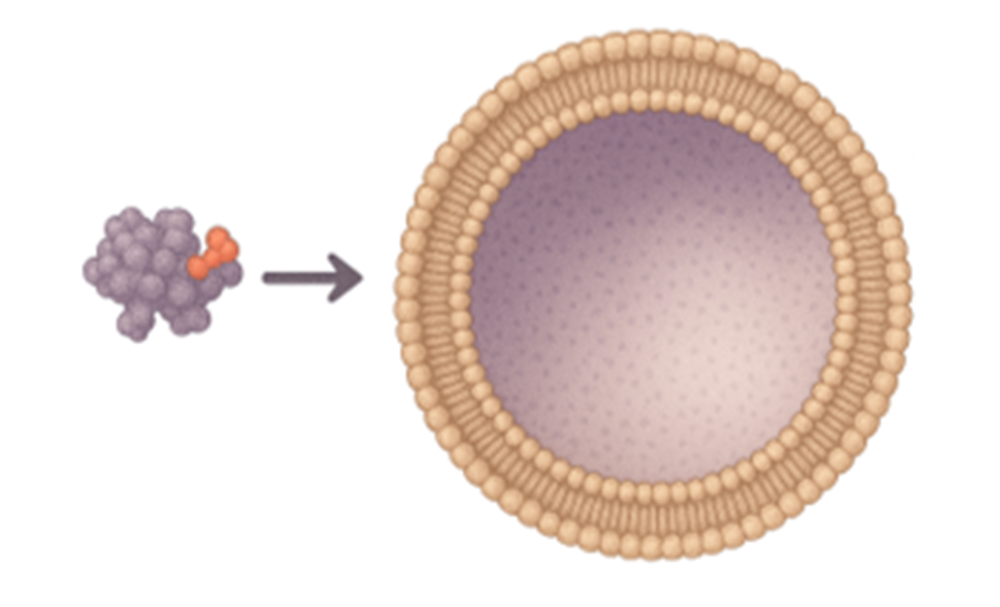
A protein motif has been identified with the ability to specifically direct exogenous molecules, such as membrane proteins carrying the motif to zymogen granules. This motif, consisting of only 7 amino acids, is also capable of targeting truncated proteins and polypeptides to these vesicles, opening the possibility of turning zymogen granules into potential therapeutic targets for pancreatic diseases.
Proof-of-concept experiments have been carried out in vitro using a rat pancreatic cell line, along with various aquaporins (water and solute channels) and polypeptides of different sizes.
- Competitive advantages
-
- Protein domain composed of only 7 amino acids.
- High specificity in directing a molecule to zymogen granules.
- High versatility for combining the protein domain within a peptide to create hybrid systems, such as liposomes.