- Tipo de expresión:
- Doctorado: Propuesta de dirección de tesis doctoral/temática para solicitar ayuda predoctoral ("Hosting Offer o EoI")
- Ámbito:
- BIologia de plantas, microbiología y biotecnología
- Área:
- Vida
- Modalidad:
- Ayudas para contratos predoctorales para la formación de doctores (antiguas FPI)
- Referencia:
- 2025
- Centro o Instituto:
- ESTACION EXPERIMENTAL DEL ZAIDIN
- Investigador:
- MARIA JOSE POZO JIMENEZ
- Palabras clave:
-
- Micorrizas, Trichoderma, resistencia inducida, tomate, Tuta absoluta, priming de defensas, oxylipinas, señalización, Manejo Integrado de Plagas
- Documentos anexos:
- 721551.pdf
- 721552.pdf
- 721553.gif
PIF2025 - Fine-tuned regulation of plant defenses by IR eliciting symbionts, FineMIR - (PID2024-162058OB-C31)
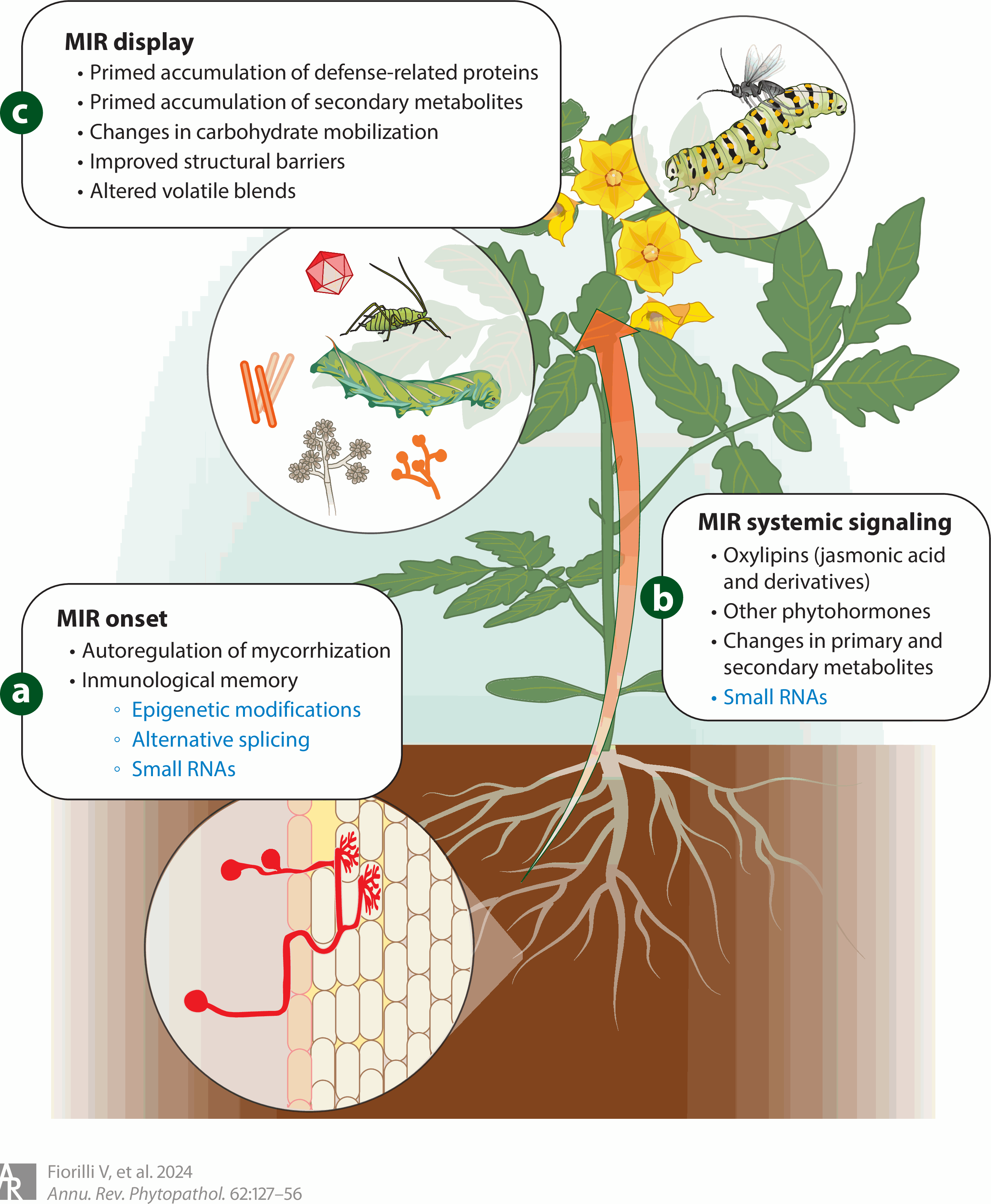
Certain beneficial soil microbes, such as arbuscular mycorrhizal fungi and Trichoderma species, can modulate plant immunity and enhance resistance to insect pests. We previously showed that microbe-induced plant resistance (MIR) is an effective tool for integrated pest management in horticulture. However, key gaps remain, particularly regarding the molecular mechanisms regulating MIR, limiting its full potential. This project aims to fill these gaps by leveraging existing omics data and established plant–microbe–insect bioassays. The goal is to refine our understanding of MIR-mediated defense regulation, focusing on components involved in MIR onset, systemic signaling, and effects on herbivores (second trophic level) and natural enemies (third trophic level). This project integrates multi-omics, bioinformatics, functional genomics, pharmacological tools, and multitrophic bioassays to achieve four objectives: (1) functionally characterize differentially regulated metabolites, proteins, genes, and transcription factors as novel MIR elements; (2) uncover signaling mechanisms coordinating MIR, with emphasis on oxylipins; (3) determine the role of plant volatiles in pest repellence and interactions with natural enemies; and (4) explore long-term and transgenerational MIR effects on herbivores. The project will deepen understanding of MIR’s mechanistic basis and long-term impacts, supporting its optimization as a sustainable alternative to chemical pesticides.