
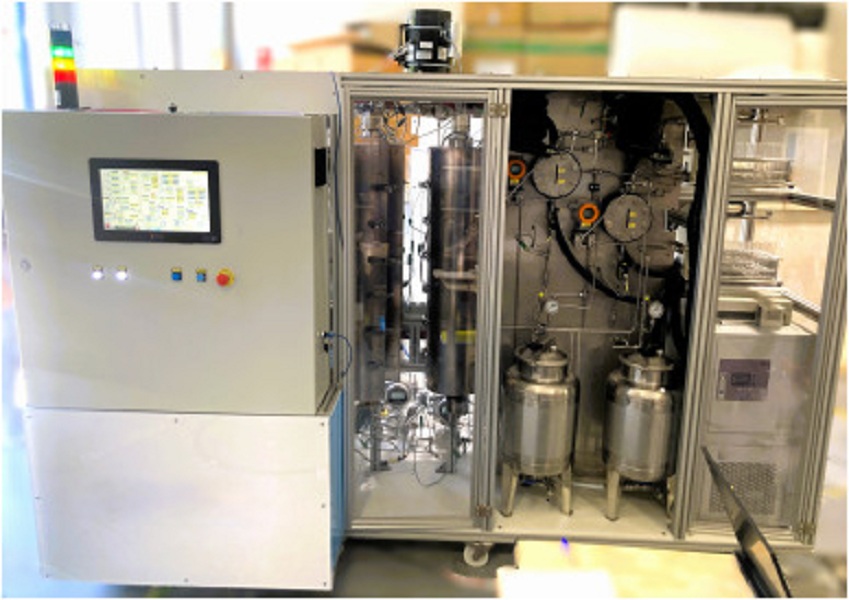
- Stage of development
-
TRL 5. Validated at a preindustrial scale
- Intellectual property
-
Priority patent application field
- Intended collaboration
-
Licensing and/or co-development
- Contact
-
José Enrique Barranco RiverosVice-presidency for Innovation and Transferj.barranco@csic.escomercializacion@csic.es
- Reference
-
CSIC/JB/004
Additional information
#Materials
#Energy
#Chemistry
#Catalyst
#Renewable energy source
#Biomass
#Industrial Process
Catalyst for upgrading Fischer–Tropsch hydrocarbons into “drop-in” fuels
Catalyst prepared by sequential impregnation of platinum and metal oxides onto fishbone-type carbon nanofibers (CNF), enabling the production of biofuels with higher yield and superior properties compared to conventional catalysts.
- Market need
-
The growing demand for fossil fuels and their high carbon emissions drive the search for more sustainable alternatives, such as biofuels derived from biomass. These biofuels are particularly needed in sectors like aviation and maritime transport, which require high-energy-density fuels. A promising route involves gasifying biomass to produce synthesis gas, which can then be converted into fuels via the Fischer–Tropsch process. A second stage of hydrocracking and hydroisomerization is required to improve fuel yield and properties. However, conventional catalysts used at this stage present limitations in both conversion and final product quality.
- Proposed solution
-
This technology proposes a new bifunctional catalyst distinguished by two key features: preparation via a sequential impregnation method and the use of fishbone-type carbon nanofibers (CNFs) as a support for platinum nanoparticles and metal oxides. This structure enhances catalytic activity in hydroisomerization and hydrocracking reactions, especially when processing Fischer–Tropsch-derived waxes. This performance is further supported by the formation of nanometric “catalyst islands.” As a result, the proposed catalyst enables the production of biofuels with higher yield and superior properties compared to conventional catalysts.
- Competitive advantages
-
- Higher catalytic activity.
- Homogeneous distribution of the active pase.
- Improved biofuel yield and quality, suitable for sectors such as aviation or marine transport. para sectores como la aviación o el transporte marítimo.